Category: IQA News

Credential recognition, quality assurance and international careers: news digests from IQA.

  • The US Overhauls College Accreditation: What Changes for Quality and Recognition

    The US Overhauls College Accreditation: What Changes for Quality and Recognition

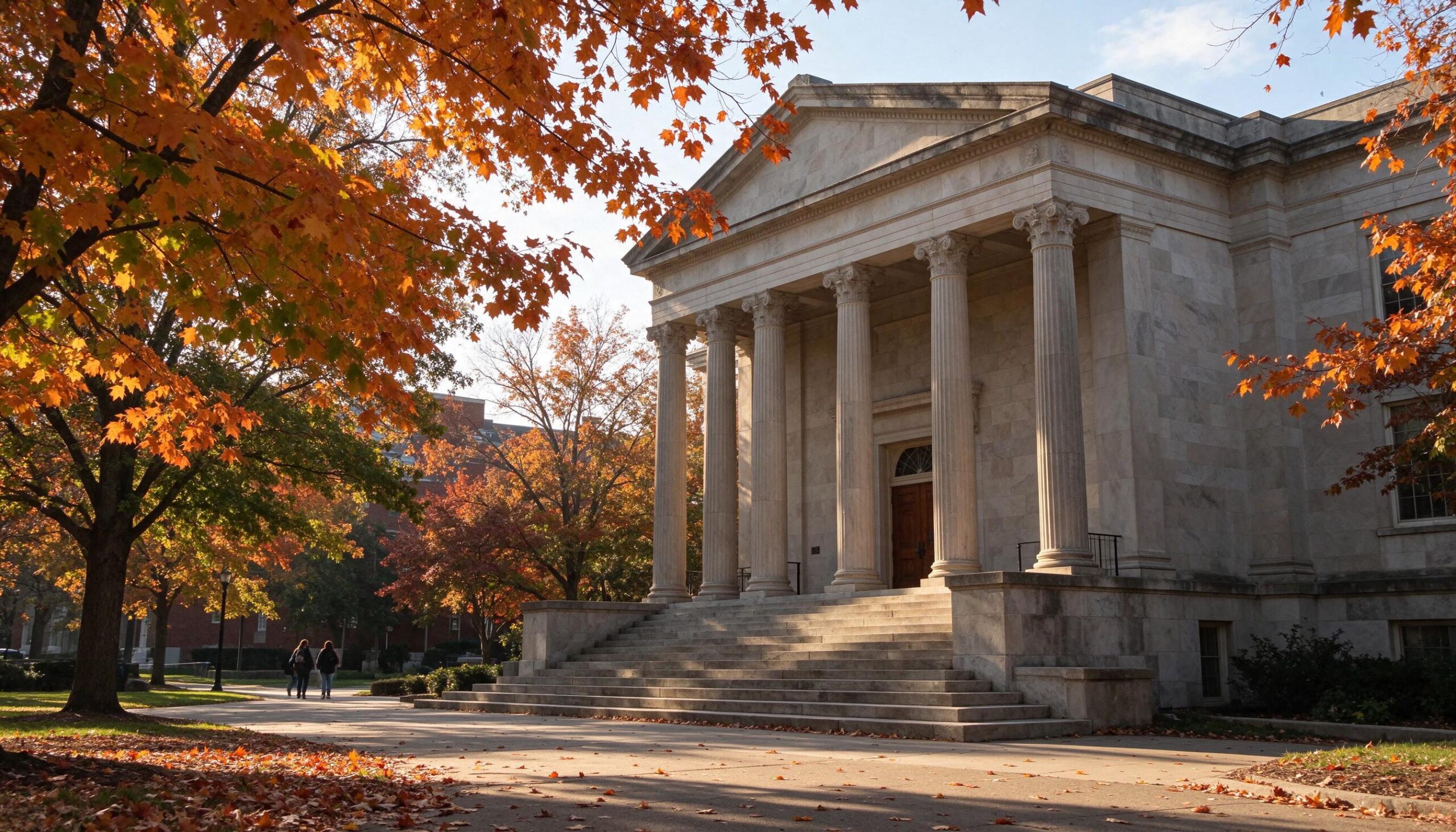
    The United States has no national ministry that approves universities. Instead, quality is assured by accrediting agencies, which are in turn recognized by the US Department of Education. In October 2026, the Department finalized the largest revision of that recognition system in decades.

    What happened

    The final rule, released on October 29, 2026 and due to take effect in July 2027, removes the requirement that a new accreditor operate for two years before seeking federal recognition. A new agency can now qualify once it has set its standards and procedures and received at least one application. The rule also asks accreditors to consider academic freedom and intellectual diversity, bars them from enforcing diversity, equity and inclusion requirements as the administration defines them, and requires them to apply their standards consistently. Supporters present the changes as a way to bring competition and a stronger focus on outcomes into a closed market. The Council for Higher Education Accreditation and other critics say their central concerns about burden, cost and institutional autonomy remain unresolved.

    Why it matters for international careers

    Outside the United States, accreditation is the main signal that a US degree is legitimate. Foreign ministries, recognition centers and employers ask a simple question: was the institution accredited by an agency recognized by the US Department of Education? If the number of recognized accreditors grows, evaluators abroad will need to follow which agencies are recognized, when, and for which institutions.

    The debate also shows that quality assurance is never settled, even in the world’s largest higher education system. Every country balances access, innovation and rigor differently, and those choices shape how its degrees are received elsewhere. A careful evaluation explains not only that an institution is accredited, but by whom and on what legal basis.

    Practical takeaways

    • Graduates of US institutions should keep a record of their institution’s accreditor at the time of graduation, since recognition is assessed as of that date.
    • Foreign employers and authorities should verify US accreditation against the Department of Education’s current list of recognized agencies.
    • IQA follows these changes and states the accrediting agency and its recognition status in every report on a US credential.

    Source: Final accreditation rule sets the stage for system overhaul, Higher Ed Dive, October 29, 2026.

    IQA News is a digest prepared by IQA, the International Qualifications Authority, from the public source above. It summarizes the news in our own words and explains what it means for credential evaluation and international careers. The illustration was generated with AI and does not depict the actual event.

    See also: Negotiators Pass Draft Rules to Overhaul College Accreditation (American Council on Education, May 22, 2026).

  • From Ratification to Reality: The Global Recognition Convention Moves Into Practice

    From Ratification to Reality: The Global Recognition Convention Moves Into Practice

    UNESCO’s Global Convention on the Recognition of Qualifications concerning Higher Education, adopted in 2019 and in force since 2023, is the first United Nations treaty dedicated to higher education. In 2026, the conversation shifted from signing it to applying it.

    What happened

    UK ENIC, the United Kingdom’s national recognition center, explained in August 2026 how the convention is moving from ratification to implementation, and how it works with the UK Department for Education within the convention’s Bureau. UK ENIC chairs a working group on how the global convention relates to the regional conventions, and the Bureau’s 2025 to 2027 work plan covers the recognition of refugees and displaced persons and quality assurance, including transnational education. Ratifications also continued during the year, with Zambia and Slovenia among the states joining.

    Why it matters for international careers

    The convention rests on a simple principle: a foreign qualification should be recognized unless the recognizing authority can show a substantial difference. It also asks for transparent procedures, reasonable timelines and reasons for refusals. For graduates, this moves the burden of proof in the right direction. A qualification from a recognized institution in a party state should no longer be treated with suspicion by default.

    The focus on transnational education and new learning modes matters as well. More and more graduates earn degrees through branch campuses, partnerships, online delivery and intergovernmental institutions. A framework that addresses these forms of learning directly reduces the uncertainty that often surrounds them in hiring and admissions decisions.

    Practical takeaways

    • Applicants should ask whether the country where they seek recognition is a party to the Global Convention or to a regional convention, and cite it when appropriate.
    • When recognition is refused, applicants are entitled under these conventions to know the reasons and to understand how to appeal.
    • IQA reports state the legal basis of an institution’s recognition, which is the first question any authority applying these conventions will ask.

    Source: From ratification to reality: what could the Global Recognition Convention mean for the UK?, UK ENIC, August 27, 2026.

    IQA News is a digest prepared by IQA, the International Qualifications Authority, from the public source above. It summarizes the news in our own words and explains what it means for credential evaluation and international careers. The illustration was generated with AI and does not depict the actual event.

    See also: UNESCO conventions on the recognition of qualifications (ratification updates) (NIC-Japan, 2026).

  • Arab States Recognition Convention Enters Into Force

    Arab States Recognition Convention Enters Into Force

    The 2022 Revised Convention on the Recognition of Studies, Diplomas and Degrees in Higher Education in the Arab States has entered into force after Lebanon became the fifth state to ratify it, joining Egypt, Qatar, the State of Palestine and Yemen. The convention remains open to every Arab state.

    What happened

    Parties to the convention agree to assess each other’s higher education qualifications against shared criteria, to decide applications within a reasonable time and to give applicants a right of appeal. The aim is to replace a patchwork of national procedures with one framework, making recognition faster and more predictable. The convention also supports exchanges, joint and dual degrees and the recognition of displaced students and scholars whose documents may be incomplete. It does not, by itself, guarantee admission, employment or a professional license.

    Why it matters for international careers

    Graduates from the Arab region are among the most mobile professionals in the world, moving between the Gulf, North Africa, the Levant, Europe and North America. Until now, the recognition of a degree from one Arab country in another depended heavily on national rules that varied in speed and transparency. A shared framework with deadlines and appeals gives applicants something they rarely had: predictable rules and a remedy when a decision seems unfair.

    The convention also completes the map of UNESCO’s regional recognition conventions, which together with the Global Convention now cover most of the world. For evaluators, this means that a qualification from a party state can be assessed against commitments its own government has accepted. For refugees and displaced scholars, the provisions on incomplete documentation may open doors that were previously closed.

    Practical takeaways

    • Graduates of institutions in Egypt, Lebanon, Qatar, Palestine and Yemen should keep certified copies and translations of their diplomas and transcripts, since recognition decisions still rest on complete files.
    • Applicants refused recognition in a party state should ask about the appeal procedure the convention now requires.
    • IQA works in Arabic as well as English and French, and can review Arabic documents in the original language.

    Source: UNESCO convention opens path to degree recognition and mobility among Arab States, The PIE News, August 17, 2026.

    IQA News is a digest prepared by IQA, the International Qualifications Authority, from the public source above. It summarizes the news in our own words and explains what it means for credential evaluation and international careers. The illustration was generated with AI and does not depict the actual event.

  • Canada’s Labor Ministers Push for Faster Foreign Credential Recognition

    Canada’s Labor Ministers Push for Faster Foreign Credential Recognition

    On July 15 and 16, 2026, Canada’s federal, provincial and territorial labor market ministers met in Halifax. Improving labor mobility and foreign credential recognition was one of five priorities on their agenda, alongside the skilled trades, labor market transfer agreements, pathways for youth and preparation for an economy shaped by artificial intelligence.

    What happened

    Ministers committed to working with the Committee on Internal Trade on a plan for Canada-wide credential recognition, and set up a working group expected to report in the fall of 2026. Their discussion builds on the federal government’s own assessment that Canada underuses internationally trained professionals, in part because credential recognition remains slow and inefficient, with consequences for productivity and for meeting labor needs in regulated occupations.

    Why it matters for international careers

    Canada is one of the most attractive destinations for skilled professionals, yet many arrive to find that their degrees and licenses are not recognized quickly enough to let them work in their field. Nurses, physicians, engineers and tradespeople spend months or years in jobs below their qualifications. A coordinated national approach would reduce the number of separate assessments a newcomer must navigate across provinces and regulators.

    For anyone planning a move to Canada, the lesson is to prepare the credential file before leaving. Recognition bodies and regulators work faster with complete, verified and well-translated documents, and with an evaluation that places each qualification correctly in its home system.

    Practical takeaways

    • Professionals considering Canada should identify early whether their occupation is regulated in the province of destination, and which body assesses it.
    • Official transcripts, course descriptions and certified translations should be gathered while the home institution is still easy to reach.
    • A detailed (course by course) evaluation is often the most useful starting point for regulated professions.

    Source: Forum of Labour Market Ministers met in Halifax to discuss shared priorities, Forum of Labour Market Ministers, July 16, 2026.

    IQA News is a digest prepared by IQA, the International Qualifications Authority, from the public source above. It summarizes the news in our own words and explains what it means for credential evaluation and international careers. The illustration was generated with AI and does not depict the actual event.

    See also: Question Period Note: Foreign Credential Recognition (Employment and Social Development Canada, December 2025).

  • AI Is Fueling a Surge in Fake Degrees. Verification Has to Catch Up

    AI Is Fueling a Surge in Fake Degrees. Verification Has to Catch Up

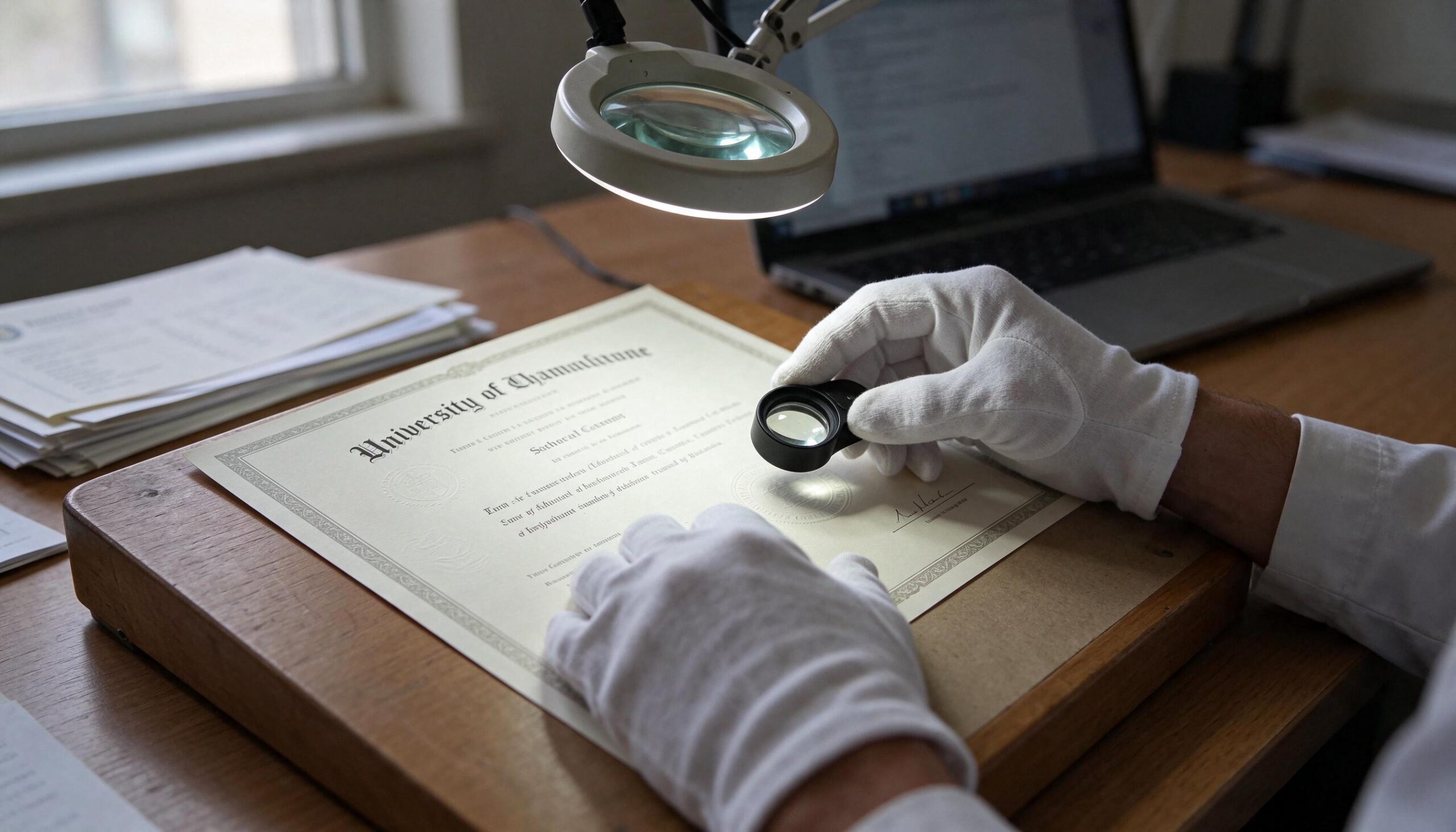
    At a webinar held on July 8, 2026, specialists from UNESCO, the Groningen Declaration Network, Norway’s Directorate for Higher Education and Skills and the education technology sector warned that artificial intelligence has sharply increased the volume and sophistication of academic fraud. Forged transcripts, fabricated diplomas, diploma mills and identity fraud now draw on the same tools that make legitimate work faster.

    What happened

    The panel described a fake degree industry estimated at about US$22 billion. Norway alone assesses roughly 20,000 foreign qualifications every year, and its recognition authority combines legal sanctions, specialist fraud teams, document analysis, verification databases and partnerships abroad. UNESCO pointed to its Global Convention on the recognition of higher education qualifications, now joined by more than 40 states, which asks governments to cooperate against fraudulent qualifications. Speakers also highlighted cryptographic and digital credentials, while stressing that these tools must remain accessible to institutions at every stage of digital development.

    Why it matters for international careers

    Every fraudulent diploma makes life harder for honest graduates. When employers, licensing boards and immigration officers know that forgeries are cheap and convincing, they become slower and more cautious with every foreign credential, including perfectly legitimate ones. Graduates whose institutions keep poor records, or whose documents were issued in another language or script, feel this suspicion first.

    The answer is not less mobility but better verification. A credential that has been checked at the source, placed in its national framework and documented in a verifiable report travels much more easily than a diploma that arrives on its own. The panel’s point that trained evaluators and professional judgment remain essential, even with new technology, is exactly the role of a credential evaluation service.

    Practical takeaways

    • Graduates should request official transcripts and, where available, digital or verifiable credentials from their institution as early as possible.
    • Employers and admissions offices should rely on evaluations that verify documents with the issuing institution, not on photocopies alone.
    • Any institution should be checked against the competent national authority and the IAU World Higher Education Database before its degrees are accepted.

    Source: Global cooperation needed to tackle ‘disease’ of fake degrees, Times Higher Education, July 8, 2026.

    IQA News is a digest prepared by IQA, the International Qualifications Authority, from the public source above. It summarizes the news in our own words and explains what it means for credential evaluation and international careers. The illustration was generated with AI and does not depict the actual event.

  • 27 US States Now Offer New Licensing Pathways for Internationally Trained Physicians

    27 US States Now Offer New Licensing Pathways for Internationally Trained Physicians

    Physicians who completed their medical education and residency abroad have long faced a hard choice when moving to the United States: repeat years of residency training, or leave medicine. That is changing quickly at the state level.

    What happened

    According to World Education Services, 27 states and two territories had passed alternative licensure pathways for internationally trained physicians by May 2026, with broad bipartisan support, and 25 states had active legislation on the subject during the 2026 sessions alone. These pathways generally allow experienced physicians to obtain a provisional license, practice under supervision for a period, and then qualify for a full license, without completing a new US residency. Idaho, which passed its law in 2024, offers early lessons on putting such a pathway into practice.

    Why it matters for international careers

    Medicine is the clearest example of how much a credential depends on recognition. A physician’s degree and years of clinical experience have little value in a new country until a licensing board accepts them. The new state pathways show that regulators can protect patients while still recognizing serious training completed abroad.

    These pathways also raise the stakes for documentation. Boards need to confirm where the physician studied, the status of the medical school, the length and content of postgraduate training and the record of practice. Gaps or inconsistencies in that file can delay or block an otherwise qualified applicant.

    Practical takeaways

    • Physicians trained abroad should check the specific pathway in the state where they hope to work, since eligibility rules and supervision periods differ.
    • Medical schools are usually checked against the World Directory of Medical Schools, and boards may require primary-source verification of every document.
    • IQA treats medical credentials as requiring special consideration, and can prepare detailed evaluations of medical degrees and postgraduate training.

    Source: 27 states expand pathways for internationally trained physicians in 2026, World Education Services, June 2, 2026.

    IQA News is a digest prepared by IQA, the International Qualifications Authority, from the public source above. It summarizes the news in our own words and explains what it means for credential evaluation and international careers. The illustration was generated with AI and does not depict the actual event.

    See also: Lessons from Idaho’s Internationally Trained Physician Pathway (World Education Services, May 13, 2026).