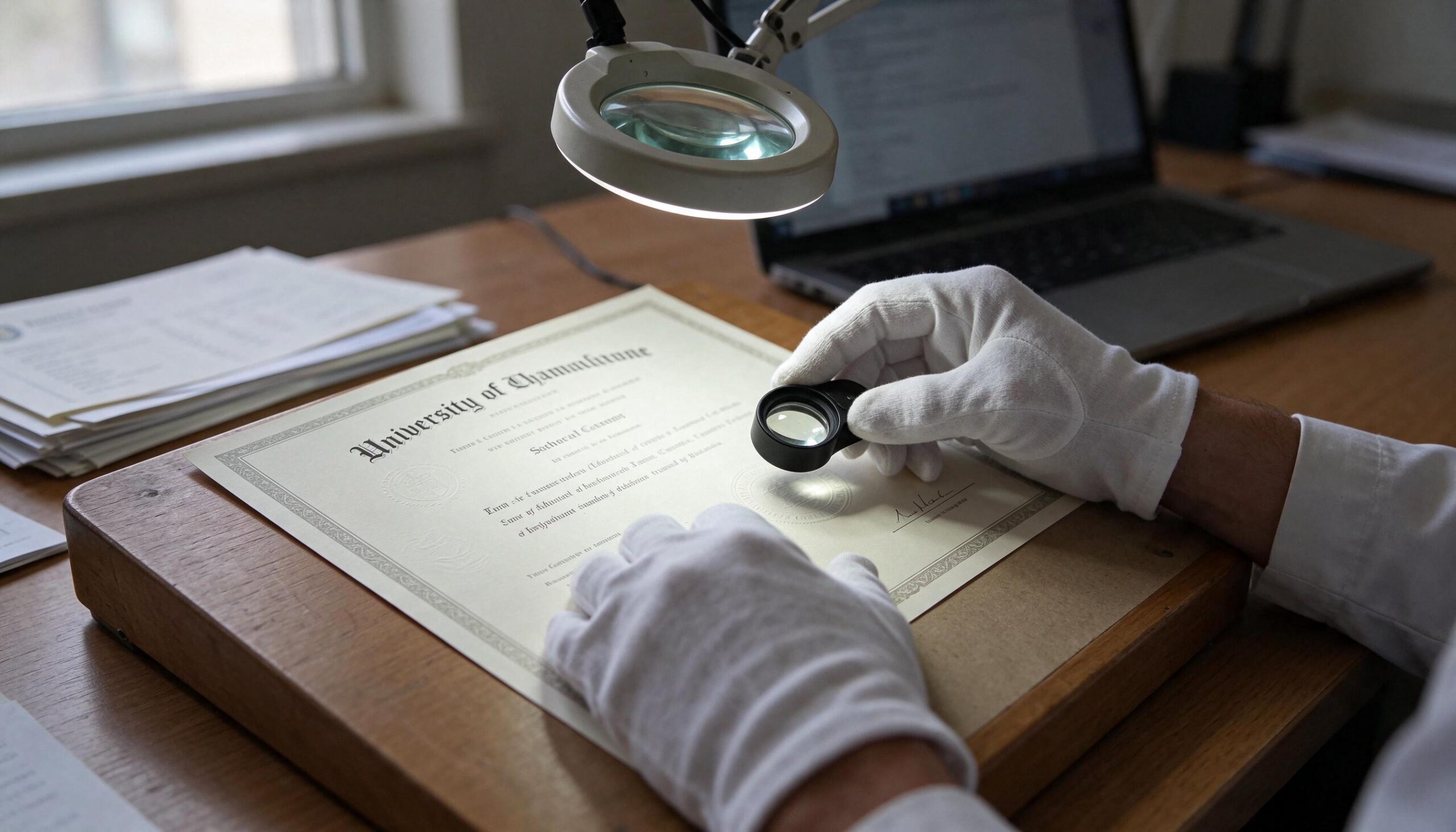
At a webinar held on July 8, 2026, specialists from UNESCO, the Groningen Declaration Network, Norway’s Directorate for Higher Education and Skills and the education technology sector warned that artificial intelligence has sharply increased the volume and sophistication of academic fraud. Forged transcripts, fabricated diplomas, diploma mills and identity fraud now draw on the same tools that make legitimate work faster.
What happened
The panel described a fake degree industry estimated at about US$22 billion. Norway alone assesses roughly 20,000 foreign qualifications every year, and its recognition authority combines legal sanctions, specialist fraud teams, document analysis, verification databases and partnerships abroad. UNESCO pointed to its Global Convention on the recognition of higher education qualifications, now joined by more than 40 states, which asks governments to cooperate against fraudulent qualifications. Speakers also highlighted cryptographic and digital credentials, while stressing that these tools must remain accessible to institutions at every stage of digital development.
Why it matters for international careers
Every fraudulent diploma makes life harder for honest graduates. When employers, licensing boards and immigration officers know that forgeries are cheap and convincing, they become slower and more cautious with every foreign credential, including perfectly legitimate ones. Graduates whose institutions keep poor records, or whose documents were issued in another language or script, feel this suspicion first.
The answer is not less mobility but better verification. A credential that has been checked at the source, placed in its national framework and documented in a verifiable report travels much more easily than a diploma that arrives on its own. The panel’s point that trained evaluators and professional judgment remain essential, even with new technology, is exactly the role of a credential evaluation service.
Practical takeaways
- Graduates should request official transcripts and, where available, digital or verifiable credentials from their institution as early as possible.
- Employers and admissions offices should rely on evaluations that verify documents with the issuing institution, not on photocopies alone.
- Any institution should be checked against the competent national authority and the IAU World Higher Education Database before its degrees are accepted.
Source: Global cooperation needed to tackle ‘disease’ of fake degrees, Times Higher Education, July 8, 2026.
IQA News is a digest prepared by IQA, the International Qualifications Authority, from the public source above. It summarizes the news in our own words and explains what it means for credential evaluation and international careers. The illustration was generated with AI and does not depict the actual event.
Leave a Reply